

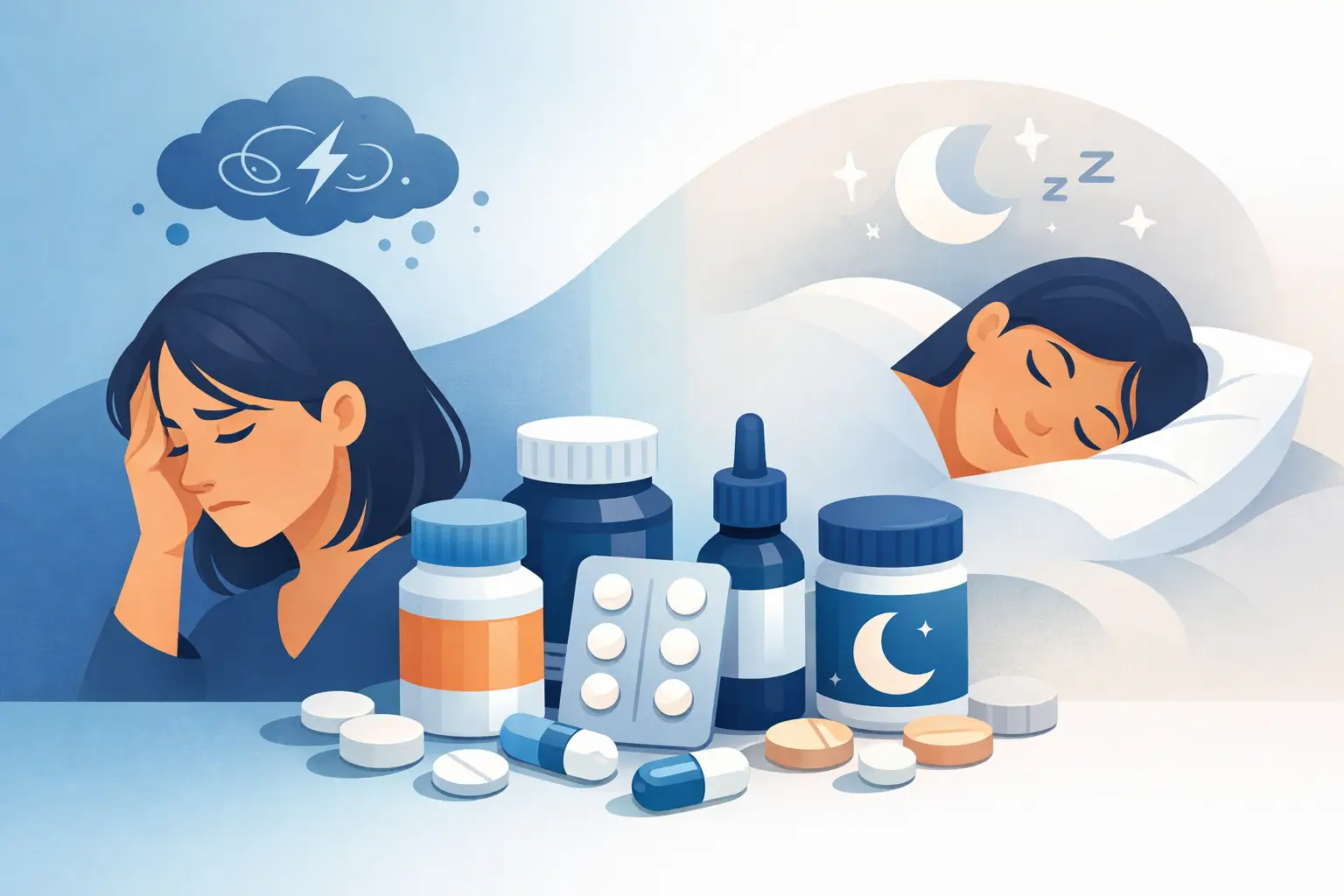
When your mind will not switch off at night, the search for anxiety and sleep medication over the counter usually starts with one thing – wanting relief quickly, privately, and without extra hassle. That is understandable. Poor sleep and anxious feelings can affect work, relationships, focus, and your ability to get through the next day. But over-the-counter options can only do so much, and knowing the difference matters if you want results rather than wasted time.
What anxiety and sleep medication over the counter can actually do
In the UK, over-the-counter products for sleep tend to be far more common than true over-the-counter options for anxiety. That can be disappointing if anxiety is the main problem, but it reflects how these medicines are regulated. Products sold without a prescription are generally intended for short-term, milder symptoms and are not designed to treat severe or ongoing anxiety disorders.
For sleep, some pharmacy products may help if your problem is occasional sleeplessness, restlessness at bedtime, or a short-term disruption in routine. They are often chosen by people dealing with travel, temporary stress, or a few difficult nights in a row. If your sleep issues are being driven by persistent anxiety, though, these products may only scratch the surface.
For anxiety, the over-the-counter market is much more limited. You may find calming supplements, herbal products, and remedies marketed for relaxation, but these are not the same as prescription anxiety medicines. They can suit some people who want a gentle starting point, yet the results are often modest and vary from person to person.
The main types of over-the-counter sleep support
Most people looking for quicker relief focus on sleep products first. These generally fall into a few categories: sedating antihistamines sold for temporary insomnia, herbal remedies such as valerian, and combination products aimed at night-time rest.
Sedating antihistamines are usually the closest thing to a conventional over-the-counter sleep medicine. They may help you feel drowsy and make it easier to drift off for a short period. The trade-off is that they can leave some people feeling groggy the next morning. If you need to drive early, work a demanding shift, or stay mentally sharp, that matters.
Herbal remedies appeal to people who prefer a gentler option. They can be useful if your sleep problem is mild or linked to bedtime tension rather than full insomnia. The downside is that they tend to be less predictable. One person may find them soothing, while another notices very little change.
Night-time products that combine ingredients can also seem convenient, but convenience does not always mean the best fit. If you are sensitive to sedating ingredients or already take other medicines, combinations may be less straightforward than they appear.
Can you buy anxiety relief over the counter?
If you are specifically searching for anxiety and sleep medication over the counter because you want something similar to diazepam or other stronger calming medicines, the short answer is no. Medicines of that type are prescription-only in the UK. They are controlled more closely because they can cause drowsiness, dependency, and other risks if used in the wrong way.
That leaves over-the-counter anxiety relief mostly in the supplement and herbal category. These products are often chosen by adults who feel tense, restless, or unable to settle, especially in the evening. For some, they can take the edge off. For others, they feel too mild, especially if anxiety is intense or long-standing.
This is where expectations make a big difference. If you are dealing with racing thoughts every night, panic symptoms, or anxiety that spills into daytime life, over-the-counter remedies may not match the level of relief you are looking for. They can still have a place, but they are not a direct replacement for prescription treatment.
When over-the-counter options may be enough
Sometimes the simplest option is the right one. If your symptoms are occasional, linked to a temporary stressful period, or mainly limited to settling down at bedtime, a short-term over-the-counter product may be a sensible first step.
This often applies when sleep trouble has only been going on for a few days, when anxiety feels mild rather than overwhelming, or when you already know your trigger – such as work stress, travel, or a disrupted schedule. In these situations, convenience matters. Many adults want discreet access, fast ordering, and a straightforward route to support without turning the whole process into a major task.
The key is to be honest about whether the problem is temporary or becoming a pattern. If you keep buying short-term remedies every week, that usually tells you something.
When stronger support may be needed
There is a point where over-the-counter products stop being practical and start becoming a holding pattern. If your anxiety is severe, your sleep has been poor for weeks, or you are relying on multiple products to get through the night, it may be time to consider a different route.
That does not mean every bad week requires a strong medicine. It does mean that persistent symptoms deserve a more suitable solution. Prescription medicines used for anxiety or sleep are stronger because they are intended for situations where lighter options are not enough. They also come with more precautions, which is why proper product choice matters.
For customers who already know the treatment they are looking for, convenience and privacy can make a real difference. A trusted online retailer can remove the friction from reordering and help you access what you need in a secure, discreet way. That is often the main priority when you are tired, stressed, and not interested in extra obstacles.
What to check before you buy
Even with over-the-counter products, choosing quickly should not mean choosing blindly. Different ingredients suit different people, and the wrong pick can leave you disappointed or simply too drowsy the next day.
First, think about whether your main issue is falling asleep, staying asleep, or calming anxiety before bed. Those are related problems, but not identical. A drowsy night-time product may help you sleep, yet do very little for the tension that starts hours earlier.
Second, consider timing. If you need to be alert first thing in the morning, products with a lingering sedative effect may not be ideal. If you already feel run down, a medicine that adds next-day heaviness can make life harder rather than easier.
Third, pay attention to what else you take. Some sleep products and calming remedies can interact with alcohol, pain relief, antihistamines, or other medicines. If you are mixing products casually, the convenience can backfire.
Buying online for privacy and speed
For many adults, the appeal of buying sleep or anxiety-related products online is simple. It is private, fast, and avoids awkward face-to-face conversations. That matters even more when the problem itself already feels draining.
A good online buying experience should feel straightforward from start to finish. Clear product options, secure payment, discreet packaging, and reliable delivery all reduce stress rather than adding to it. If you are buying a sensitive treatment, confidence in the process is part of the product.
That is why some customers use online retailers such as Ukmedslocal. The focus is not on making things complicated. It is on helping people order from home with privacy, speed, and a simple checkout experience that fits around everyday life.
A realistic approach to relief
There is no single answer to anxiety and sleep medication over the counter because sleep problems and anxiety do not show up in the same way for everyone. Some people need a short-term sleep aid after a rough patch. Others try mild calming products and realise quickly that they need something stronger. The right choice depends on symptom severity, how long it has been going on, and whether your goal is better sleep, calmer evenings, or both.
If you are choosing an over-the-counter option, it helps to treat it as a practical tool rather than a cure-all. Use it with a clear reason, pay attention to how it affects you, and do not ignore signs that the problem is becoming more than temporary. Quick access is helpful, but the best result comes from picking the option that actually matches your needs.
A calmer night often starts with one honest question: do you need something light for now, or something more effective that fits the reality of what you are dealing with?