
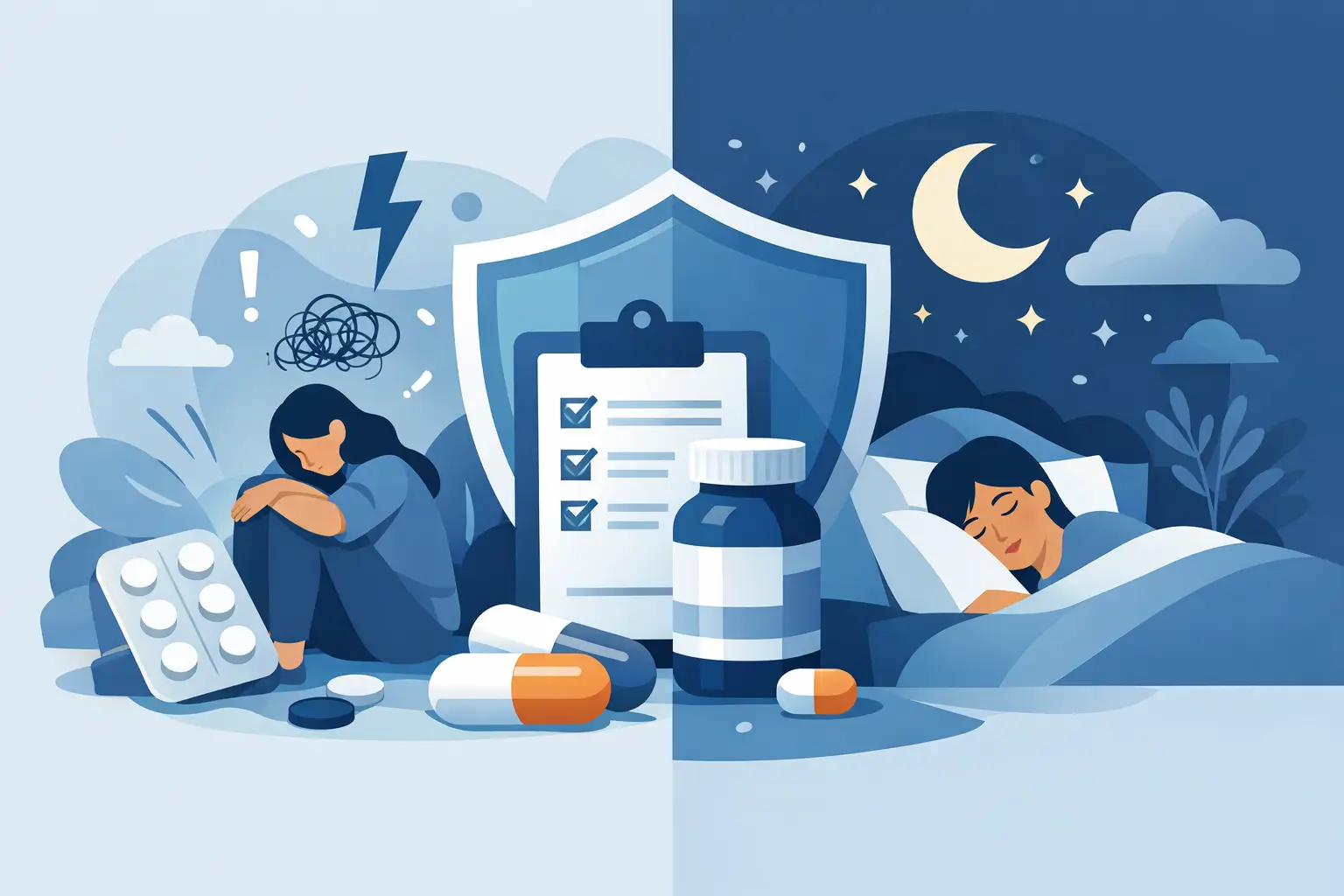
If you are asking what is the safest medication for anxiety and sleep, you are probably not looking for theory. You want something that helps you feel calmer, sleep better, and fit into daily life without extra stress. The honest answer is that there is no single medication that is safest for everyone. Safety depends on your symptoms, your age, other medicines you take, how often you plan to use it, and whether you need help for a few nights or something more consistent.
That can sound frustrating, but it is also what protects you from choosing the wrong option. A medicine that works well for one person can cause next-day drowsiness, dependence, or awkward interactions for someone else. When anxiety and poor sleep are feeding each other, the safest route is usually the one that matches the problem properly rather than the strongest tablet available.
What is the safest medication for anxiety and sleep in real terms?
Most people hear the word safe and think no side effects, no risk, and quick relief. Medicines do not work like that. In practice, the safest medication is usually the one with the lowest risk of dependence, the fewest interactions with your current treatment, and a sensible fit for how long you need it.
For short-term anxiety with sleep disruption, doctors often think carefully about sedative medicines such as benzodiazepines or Z-drugs because they can work quickly but carry real downsides. These include tolerance, dependence, reduced alertness, and impaired driving. For longer-term anxiety, medicines such as SSRIs are often considered safer overall, but they are not really sleep tablets and they do not work overnight.
So the safest option is not always the fastest one. That trade-off matters.
The main medication types used for anxiety and sleep
Benzodiazepines
Medicines such as diazepam and clonazepam can reduce anxiety and make it easier to relax. They are often effective in the short term, especially when anxiety feels acute or overwhelming. For some people, they also make sleep easier because they reduce the agitation that keeps the mind switched on.
The reason they are not usually described as the safest long-term choice is simple. They can be habit-forming. Over time, the body can get used to them, which means the same dose may feel less effective. They can also cause grogginess, poor concentration, slower reaction times, and more risk if mixed with alcohol or opioid painkillers.
Used carefully and for a short period, they can be appropriate. Used casually or for too long, the safety profile changes.
Z-drugs for sleep
Medicines such as zolpidem are mainly used for insomnia rather than anxiety itself. They can help people fall asleep faster, which is useful when broken sleep has become the main problem. They are often chosen when the goal is short-term sleep support rather than daytime anxiety control.
They still come with cautions similar to sedatives. Next-day drowsiness, memory issues, sleep behaviours, and dependence risk can all be part of the picture. They may be safer for a very specific short-term sleep problem than taking a general anti-anxiety medicine, but they are not a risk-free fix.
Antidepressants used for anxiety
SSRIs and similar medicines are commonly used for ongoing anxiety disorders. They are often considered safer than benzodiazepines for longer-term management because they are less likely to cause dependence. That said, they are not a quick answer for tonight’s sleep problem.
Some can initially disturb sleep before things settle. Others may improve sleep indirectly once anxiety becomes more controlled. If your main issue is persistent anxiety with regular sleep disruption, this category may be safer over months rather than days.
Sedating antihistamines and other options
Some people use sedating antihistamines for sleep. These can feel milder, but milder does not always mean safer. They may still cause next-day tiredness, dry mouth, and reduced alertness, especially in older adults. Certain off-label medicines are also used in some cases, but that does not automatically make them safer or simpler.
Which option is often considered safest?
If the question is about long-term use, antidepressants prescribed for anxiety are often viewed as safer than sedatives because they do not usually create the same pattern of dependence. If the question is about a very short spell of severe anxiety or insomnia, a sedative medicine may still be appropriate, but only when used carefully and for a limited time.
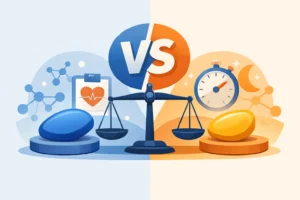
That is why there is no universal winner. The safest medication for anxiety and sleep depends on whether you need rapid relief, ongoing control, or occasional support.
For example, if your anxiety is constant and sleep is poor most nights, taking a short-acting sleep tablet every night may not be the safest route. If you are going through a brief, intense period and need a short reset, that same type of medicine may be a reasonable option under the right circumstances.
When safety matters more than speed
It is easy to focus on what works fastest when you have had three bad nights in a row. But speed is only one part of the decision. A medicine that helps in 20 minutes is not automatically the best choice if it leaves you foggy at work, affects driving the next morning, or becomes difficult to stop.
This is especially relevant if you have a job that requires concentration, if you care for children, or if you already take other medicines that can cause drowsiness. Safety is also more important if you have a history of substance misuse, breathing problems, liver issues, or are older, because the risk profile can shift quickly.
What can make a medication less safe?
The same tablet can be fairly straightforward in one situation and risky in another. Alcohol is a major factor. Mixing sedative medicines with alcohol can increase drowsiness and affect breathing. Combining them with opioid pain relief or other calming medicines can raise the risk further.
Dose matters too. So does timing. Taking a medicine too late at night can leave you impaired the next morning. Taking it more often than planned can lead to tolerance or rebound symptoms. Buying based only on what helped a friend is another common mistake, because their health background may be very different from yours.
A practical way to think about your options
If your main problem is anxiety during the day and poor sleep follows from that, treatment aimed at anxiety may make more sense than a dedicated sleep tablet. If your anxiety is mainly bedtime worry, occasional night-time medication may be considered differently. If you wake in panic or have severe physical symptoms, the balance may shift again.
This is where being clear about the pattern helps. Are you struggling to fall asleep, stay asleep, or calm down in general? Do you need occasional support or something sustainable? A safer choice usually starts with those questions.
For adults who already know the medicine they use and need a discreet, straightforward way to order, convenience matters as well. A reliable online service such as Ukmedslocal can make access simpler, with privacy-focused ordering and home delivery, but convenience should still sit alongside sensible use.
What is the safest medication for anxiety and sleep if you need short-term relief?
For short-term relief, medicines like diazepam or zolpidem may be used because they act quickly. The key point is that safer use comes from keeping the course short, avoiding alcohol, sticking to the dose, and not treating them as an open-ended answer.
If you need help for more than a brief period, the question usually changes from which tablet works fastest to which approach remains manageable over time. That is where sedatives often become less attractive from a safety point of view.
What to watch for before choosing anything
Look at the basics first. Check whether the medicine can interact with what you already take. Think about whether you need to drive early, work shifts, or be alert during the night. Be honest about how often you are likely to rely on it. If the answer is most nights or every stressful day, the safest answer may not be a sedative medicine at all.
It also helps to separate a rough patch from a pattern. A few disrupted nights after stress at work is different from months of escalating anxiety and poor sleep. The safer response often depends on that timeline.
The better question to ask
Instead of only asking what is the safest medication for anxiety and sleep, ask what is the safest option for my type of anxiety, my sleep problem, and the length of time I need help. That small shift usually leads to a better answer.
Quick-acting medicines can be useful, but they need more care. Longer-term medicines may be safer in the bigger picture, but they ask for patience. There is no perfect tablet, only a better fit.
If you are choosing support for anxiety and sleep, aim for the option that helps without creating a second problem. Relief matters, but staying clear-headed, functional, and in control matters just as much. That is usually where the safest choice becomes clearer.